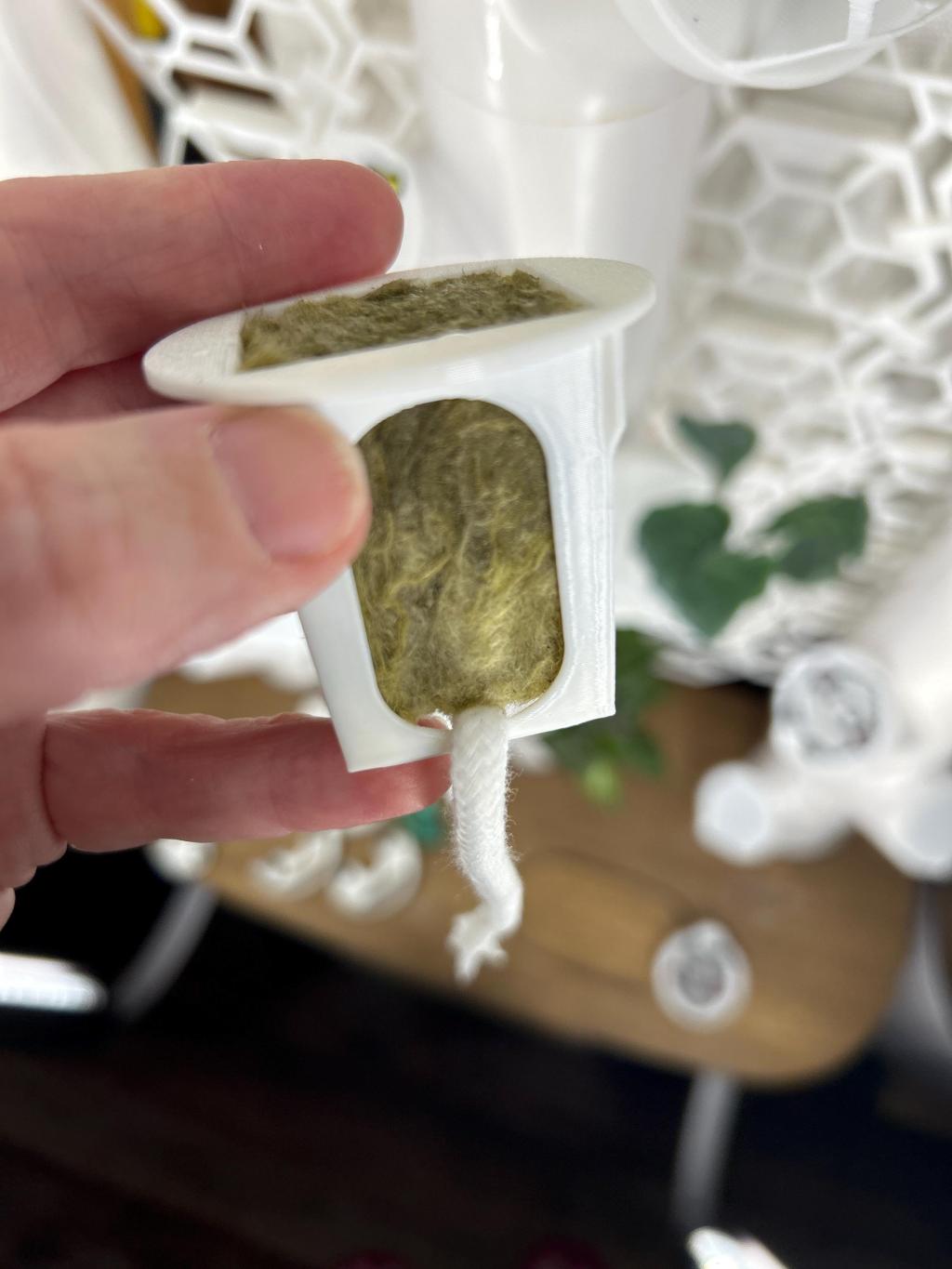
If you’ve purchased a splitter or extender from us, you’ve probably received a few wicks in your package. These small pieces of string play an important supporting role in your hydroponic setup—but they’re also one of the most common sources of confusion. This guide walks through when to use wicks, how to install them correctly, and how to know when it’s time to remove them.
🌱 What Wicks Actually Do
A wick is a bridge between your growing medium and the water source. It uses capillary action to draw water upward and keep the growing medium consistently moist.
The key word there is keep. Wicks are great at holding an already-moist growing medium at the right dampness, but they can’t carry enough water to rescue a bone-dry pod. That’s why proper startup (covered below) matters so much.
Important: Only use wicks when your plant’s roots can’t yet reach the water source. If roots are already hanging down into the water, the plant doesn’t need a wick’s help—and the wick is just extra material sitting in your system.
🧺 What You Need
- One wick per yCube/growing medium
- A splitter or extender (our wicks are pre-cut to fit these)
- Water, and a plant that needs a little help staying hydrated
Our wicks are a polyester blend and come pre-cut to the right length for both our splitters and extenders. When properly installed, the lower ends rest just under the water level. Refill packs are available if you need extras down the road.
💧 Installing the Wick
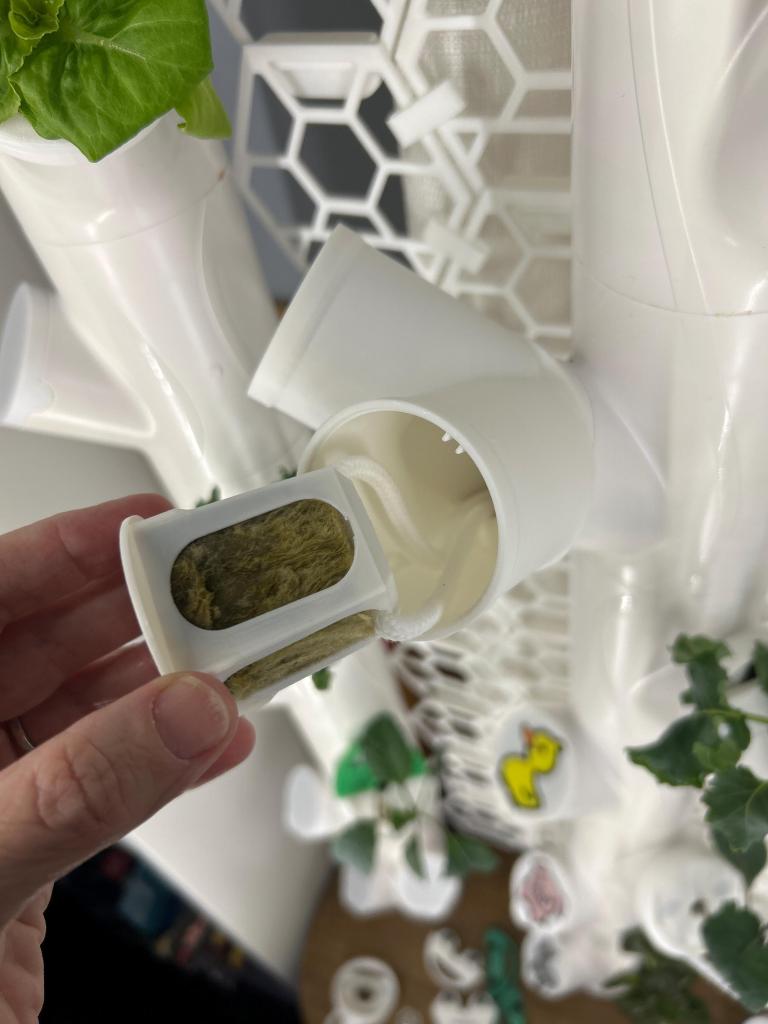
Step 1: Create space in the yCube. Gently push the growing medium up so there’s enough room between it and the bottom of the yCube to slide the wick in between them.
Step 2: Insert the wick. Place the wick in the gap so it sits between the growing medium and the yCube, with the ends hanging down toward the water.
Step 3: Re-seat the growing medium. Push the growing medium back down until it just touches the wick.
This is the part that trips people up. You want contact—but gentle contact:
- ❌ Too tight: If the growing medium smashes the wick, water can’t flow through it freely.
- ❌ Air gap: If there’s a gap between the wick and the growing medium, the water stops there and never reaches the roots.
- ✅ Just touching: Moisture transfers smoothly from wick to growing medium.
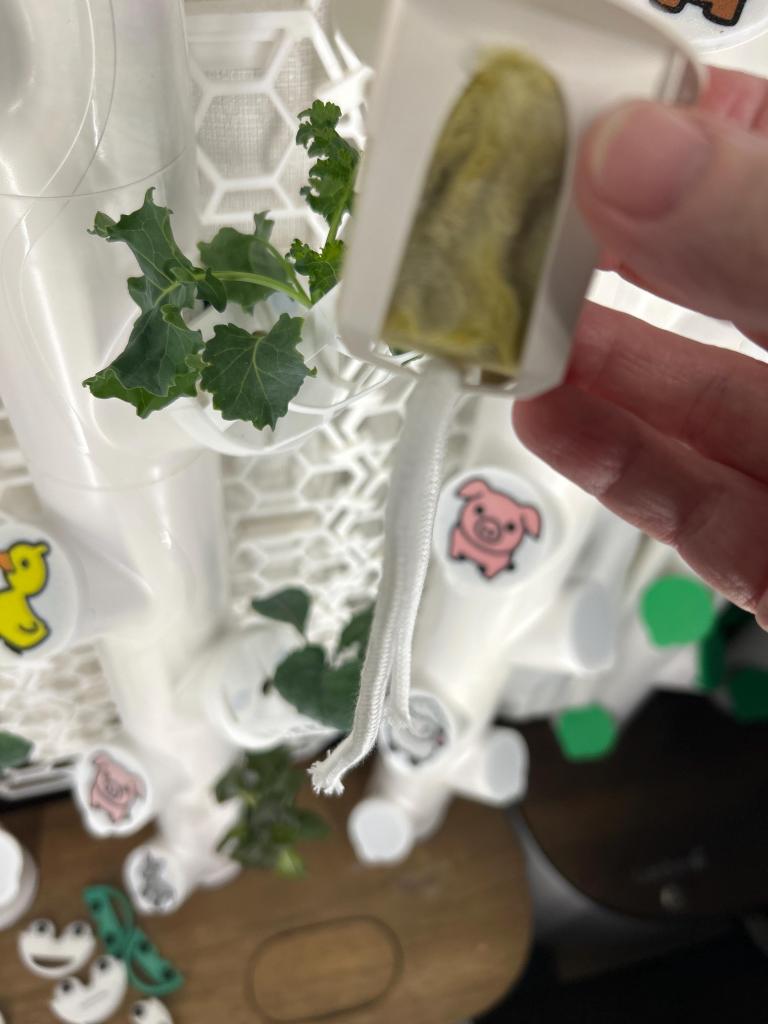
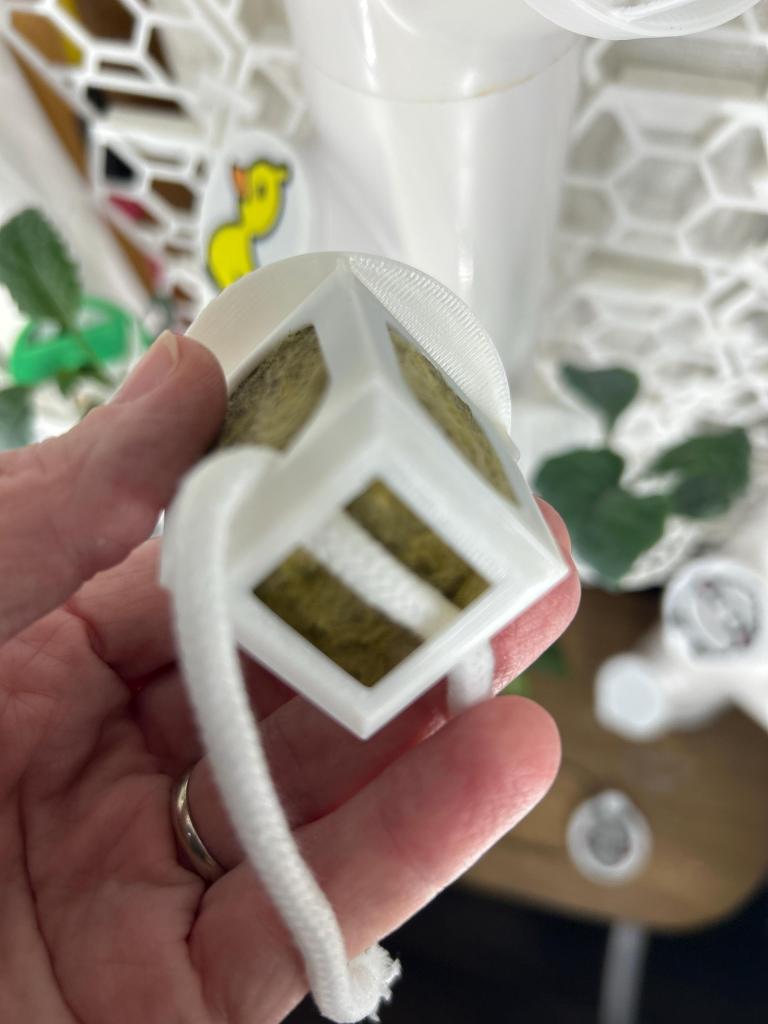
Step 4: Thoroughly moisten everything. Once the wick is in place, wet both the wick and the growing medium thoroughly before starting. Again—a wick maintains moisture well, but it can’t reliably wet a dry medium from scratch.
🌿 Using Wicks with Splitters
If you’re using a splitter with plants in both sides, remember the rule: one wick per plant, one plant per side. Both sides filled means two wicks.
Check that each wick is independently positioned correctly—each side needs its own properly seated wick reaching the water.
👀 Daily Checks (Yes, Really)
For the first stretch of a young plant’s life, physically check on the pods every day or two. Touch the top of the growing medium to confirm it’s staying moist. A quick peek is all it takes—it’s the difference between catching a small problem early and losing a seedling.
While you’re at it, keep an eye on your water level. A wick can only do its job if the water level is high enough for it to reach.
🌊 When to Remove the Wick
Once the plant’s roots grow long enough to reach down into the water themselves, the wick has done its job and it’s time to retire it.
The visual cue: roots visibly extending down into the water level.
How to remove it: Carefully pull on one end of the wick, gently pulling away any roots that might be attached to it. If you need more room to work, push the growing medium up a tiny bit. Once the wick is out, properly seat the growing medium back down into the yCube.
🧼 Cleaning and Reuse
Wicks are reusable. To clean:
- Wash in warm, soapy water
- Rinse very well to remove all soap residue
- Air dry completely
Once clean and dry, a wick can go back into service—as long as it isn’t stiff or damaged. A wick that’s lost its flexibility can’t wick properly, so retire anything that feels crunchy or shows wear.
Over time you may notice algae growth on wicks that sit in water and light. This is normal in hydroponic setups. If buildup becomes an issue, a soak in citric acid can help clear mineral deposits and keep the wick flowing freely.
🔧 Quick Troubleshooting
| Problem | Likely Cause |
|---|---|
| Growing medium drying out | Air gap between wick and medium, or wick smashed too tight |
| Medium never got wet from the start | Dry medium at installation—always moisten thoroughly at setup |
| Wicks slimy or crusty | Algae or mineral buildup—time for a cleaning |
| Wick hanging in air | Water level dropped—top off your reservoir |
Final Thoughts
Wicks are a temporary helper, not a permanent fixture. Install them when the roots can’t reach the water, keep an eye on moisture daily, and remove them once the plant can drink on its own. With that routine, your young plants get steady moisture exactly when they need it most.
Questions about wicks, splitters, or extenders? We’re always happy to help—just reach out.


Leave a comment